
Essential Components of an Effective Hyperpigmentation Skin Care Routine for Optimal Pigmentation Management
Hyperpigmentation is a common skin condition characterized by dark patches caused by excess melanin production. Individuals often seek effective skin care routines to manage this issue, aiming to enhance their skin tone and overall complexion. This article serves as a comprehensive guide, detailing the essential components of a hyperpigmentation skin care routine. By understanding the underlying causes and effective treatments, individuals can tailor their approach to achieve optimal results. Each section will cover major aspects such as the causes, recommended treatments, key skincare products, preventative measures, and the importance of clinical consultations. Incorporating these elements into daily skincare regimens can significantly aid in managing hyperpigmentation.
What Are the Primary Causes and Types of Hyperpigmentation?
Hyperpigmentation arises from various factors, including sun exposure, hormonal changes, and inflammation. Understanding these causes is crucial for developing an effective treatment strategy. The most common types of hyperpigmentation include melasma, sunspots, and post-inflammatory hyperpigmentation.
Which medical conditions and external factors contribute to hyperpigmentation?
Several medical conditions and environmental factors can trigger hyperpigmentation. Hormonal fluctuations during pregnancy or due to contraceptive use are significant contributors to melasma, leading to dark patches on the face. Additionally, prolonged sun exposure increases the likelihood of developing sunspots, while skin trauma, such as cuts or acne, can result in post-inflammatory hyperpigmentation. Notably, certain medications can also induce pigmentation changes as a side effect. Recognizing these triggers is vital in formulating an effective treatment plan.
How can understanding hyperpigmentation types guide treatment choices?
Identifying the specific type of hyperpigmentation is essential in determining the most appropriate treatment. Melasma, often exacerbated by sun exposure and hormonal changes, may respond well to topical agents like hydroquinone and retinoids. Sunspots, commonly linked to UV damage, can be effectively treated with laser therapy or chemical peels that target pigmentation. Post-inflammatory hyperpigmentation often improves with the use of antioxidants and targeted skincare products that promote skin renewal. Understanding these relationships helps patients make informed decisions regarding their skincare routines.
What Dermatologist Recommended Treatments Are Effective for Hyperpigmentation?
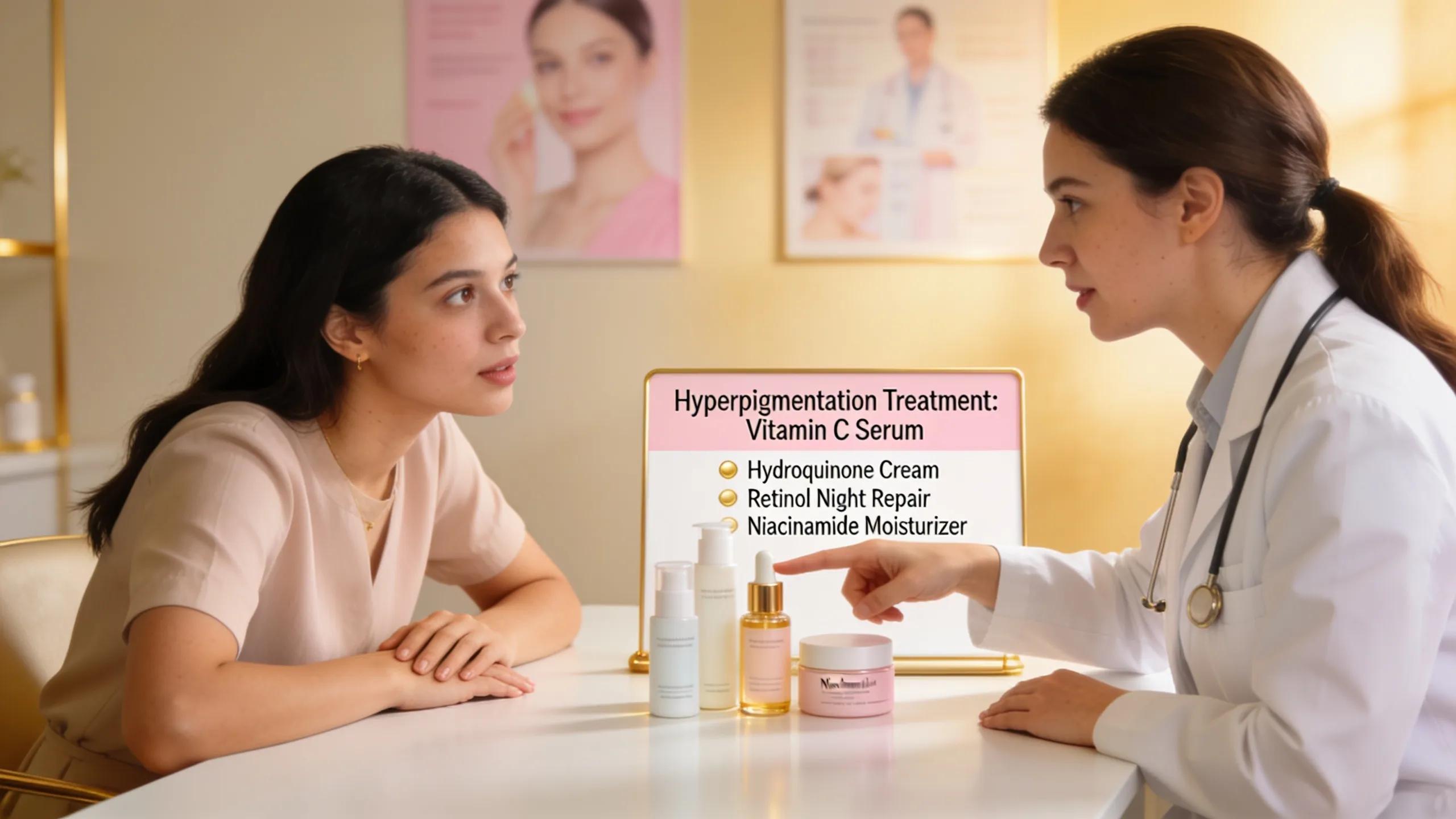
Dermatologists recommend various treatments for combating hyperpigmentation, ranging from topical solutions to professional procedures. A well-rounded treatment approach tailored to individual skin types can yield significant results.
How do topical agents like vitamin C, hydroquinone, retinol, and niacinamide reduce pigmentation?
Topical treatments play a crucial role in managing hyperpigmentation. Vitamin C is well-known for its antioxidant properties, helping to brighten the skin and inhibit melanin production. Hydroquinone, often considered the gold standard, works by safely lightening dark spots when used under a dermatologist's supervision. Retinol, a derivative of vitamin A, enhances skin cell turnover, effectively reducing the appearance of pigmentation over time. Niacinamide also provides benefits by diminishing dark spots and improving skin texture through its anti-inflammatory properties. Incorporating these agents into a routine can lead to sustained improvement in skin tone.
Further research highlights the multifaceted nature of vitamin C, not only in reducing hyperpigmentation but also in its broader protective role against skin damage.
Vitamin C's Role in Reducing Hyperpigmentation and Photoaging
As one of the most powerful antioxidants in the skin, vitamin C has been shown to protect against photoaging, ultraviolet-induced immunosuppression, and photocarcinogenesis. It also has an antiaging effect by increasing collagen synthesis, stabilizing collagen fibers, and decreasing collagen degradation. It decreases melanin formation, thereby reducing pigmentation. Vitamin C is the primary replenisher of vitamin E and works synergistically with vitamin E in the protection against oxidative damage.Topical vitamin C and the skin: mechanisms of action and clinical applications, 2017
Additionally, studies have explored various applications of vitamin C derivatives, showcasing their effectiveness when integrated into daily skincare routines.
Topical Vitamin C Derivatives for Hyperpigmentation Treatment
In this study, 35 patients were treated with a novel iontophoresis treatment, which showed favorable whitening effects of topical vitamin C products incorporated daily in hyperpigmentation to the vitamin C derivative alone.
A review of topical vitamin C derivatives and their efficacy, CD Enescu, 2022
The efficacy of topical vitamin C has also been specifically evaluated in clinical settings, demonstrating its positive impact on common hyperpigmentation concerns.
Topical Vitamin C Efficacy in Melasma and Photoaging
This study revealed that vitamin C is effective in treating uneven, wrinkled skin and has an improvement of hyperpigmentation in 14/16 patients.Efficacy of topical vitamin C in melasma and photoaging: A systematic review, 2023
What role do professional procedures such as chemical peels and laser therapy play in treatment?
Professional procedures, including chemical peels and laser therapy, offer more intensive options for hyperpigmentation management. Chemical peels remove the outer layers of the skin, promoting new cell growth and reducing pigmentation. Laser therapy targets melanin directly, providing rapid results in minimizing dark spots. For those with resistant hyperpigmentation, these treatments can be especially beneficial. It is crucial to consult with a dermatologist to create a personalized treatment plan that considers skin type and individual needs.
Which Key Skincare Products Should Be Incorporated in a Daily Routine for Dark Spot Reduction?
A robust daily skincare routine is essential for effectively reducing dark spots. Incorporating specific products based on dermatological advice ensures optimal results.
What are the essential topical formulations recommended by dermatologists?
Dermatologists commonly recommend incorporating products containing proven ingredients for hyperpigmentation treatment in daily routines. These include serums and creams enriched with vitamin C, hydroquinone, and retinol. Moreover, formulations with alpha hydroxy acids (AHAs) and beta hydroxy acids (BHAs) can further enhance skin exfoliation and renewal. Selecting high-quality products targeted toward dark spot reduction should form the basis of anyone's skincare regimen.
How does daily application of sunscreen contribute to pigmentation prevention?
Sunscreen serves as a vital protector against further pigmentation. Daily application of broad-spectrum sunscreen with SPF 30 or higher can significantly prevent the exacerbation of existing dark spots and the formation of new ones. Sun exposure is a primary trigger for hyperpigmentation, making diligent sunscreen use crucial in any skincare routine. Regularly applying sunscreen, even on cloudy days, should be a non-negotiable habit for anyone aiming to manage pigmentation effectively.
How Can Patients Effectively Prevent Hyperpigmentation and Support Skin Health?

Preventative measures are key when combating hyperpigmentation. Implementing proactive strategies can significantly decrease the likelihood of developing new spots.
What proven strategies minimize pigmentation triggers and promote healthy skin?
Several strategies exist to minimize triggers of hyperpigmentation. These include maintaining a consistent skincare routine focusing on hydration and gentle exfoliation while avoiding harsh products that may irritate the skin. Limiting sun exposure by seeking shade during peak hours and wearing protective clothing also plays a critical role in prevention. Lastly, adopting a balanced diet rich in antioxidants can support overall skin health and resilience against pigmentation changes.
Can natural interventions effectively reduce melasma and dark spots?
Natural interventions, such as the use of licorice extract and green tea, have been investigated for their potential effectiveness in lightening hyperpigmentation. While these options may not yield results as quickly as chemical treatments, some studies suggest they can be beneficial when incorporated into a comprehensive skincare routine. However, it's essential to consult with a dermatologist before relying solely on natural remedies to manage hyperpigmentation.
How Do Clinical Consultations Enhance Personalized Hyperpigmentation Skin Care Routines?
Consultations with dermatologists play a crucial role in tailoring effective hyperpigmentation treatment plans. Patient-specific evaluation ensures that the most appropriate methods are utilized.
What is involved in a dermatology consultation and skin evaluation for pigmentation?
A dermatology consultation typically involves a thorough skin evaluation, during which the dermatologist assesses pigmentation levels and determines the causes behind them. The evaluation may include discussing the patient's medical history, lifestyle factors, and previous treatments. This comprehensive approach allows the dermatologist to recommend personalized treatment options tailored to the patient's skin needs.
How do personalized treatment plans improve outcomes in hyperpigmentation management?
Personalized treatment plans significantly enhance the efficacy of hyperpigmentation management. By addressing individual skin types, lifestyles, and dermatological histories, patients are more likely to achieve desired outcomes. Furthermore, follow-up consultations can help track progress and adjust treatment plans accordingly. This tailored approach enhances patient satisfaction and maximizes the potential for success in managing hyperpigmentation.
Incorporating these products with prescribed instructions can lead to substantial improvements in hyperpigmentation. Understanding how to properly use these formulations ensures patients achieve the best possible outcomes in their skin care regimens.
